Atsako iš karto
Kelionių asistentas
Kelionių asistentas
jūsų svetainėje
Vienas langas, kuriame klientas užduoda klausimą, išsirenka kelionę ir palieka užklausą.
-
Užklausos vedlys Veikia
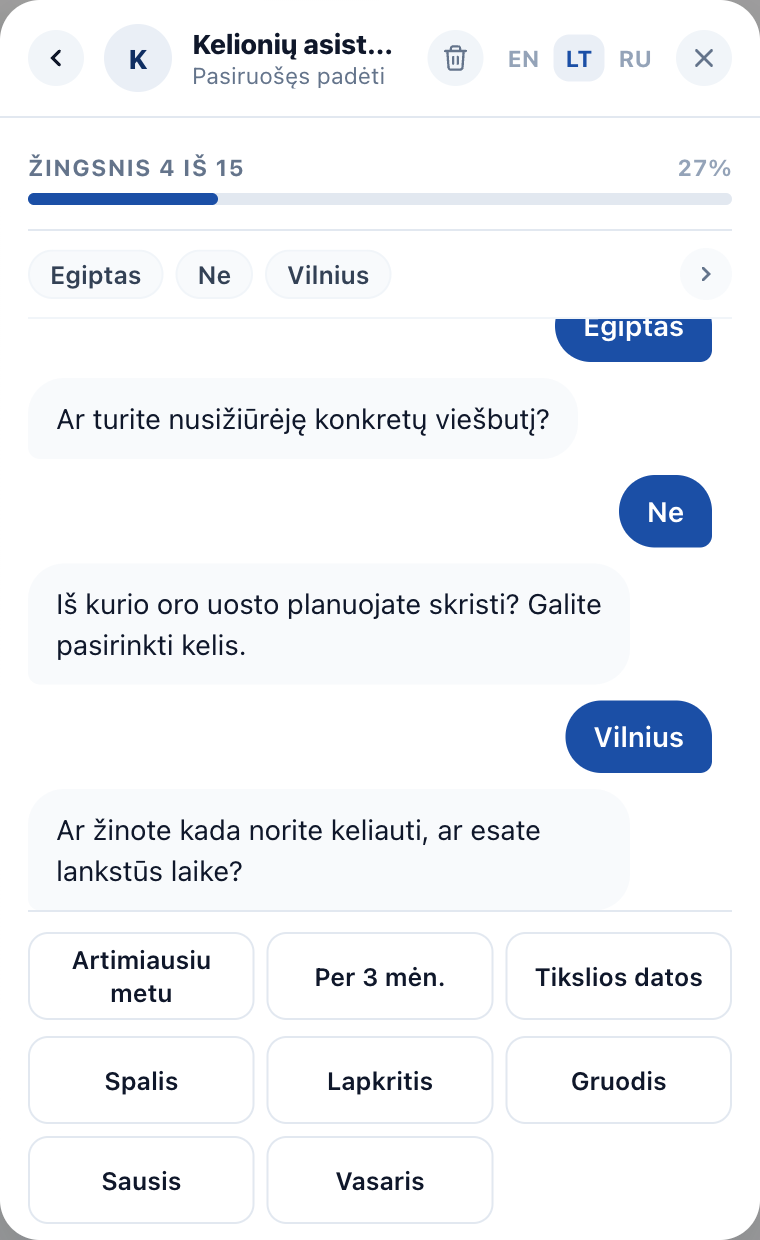
Klientas atsako paspaudimais, apie dvi minutes.
- Kryptis, datos, keliautojai, biudžetas, viešbutis, maitinimas, kontaktai
- Nurodžius konkretų viešbutį, nereikalingi klausimai praleidžiami
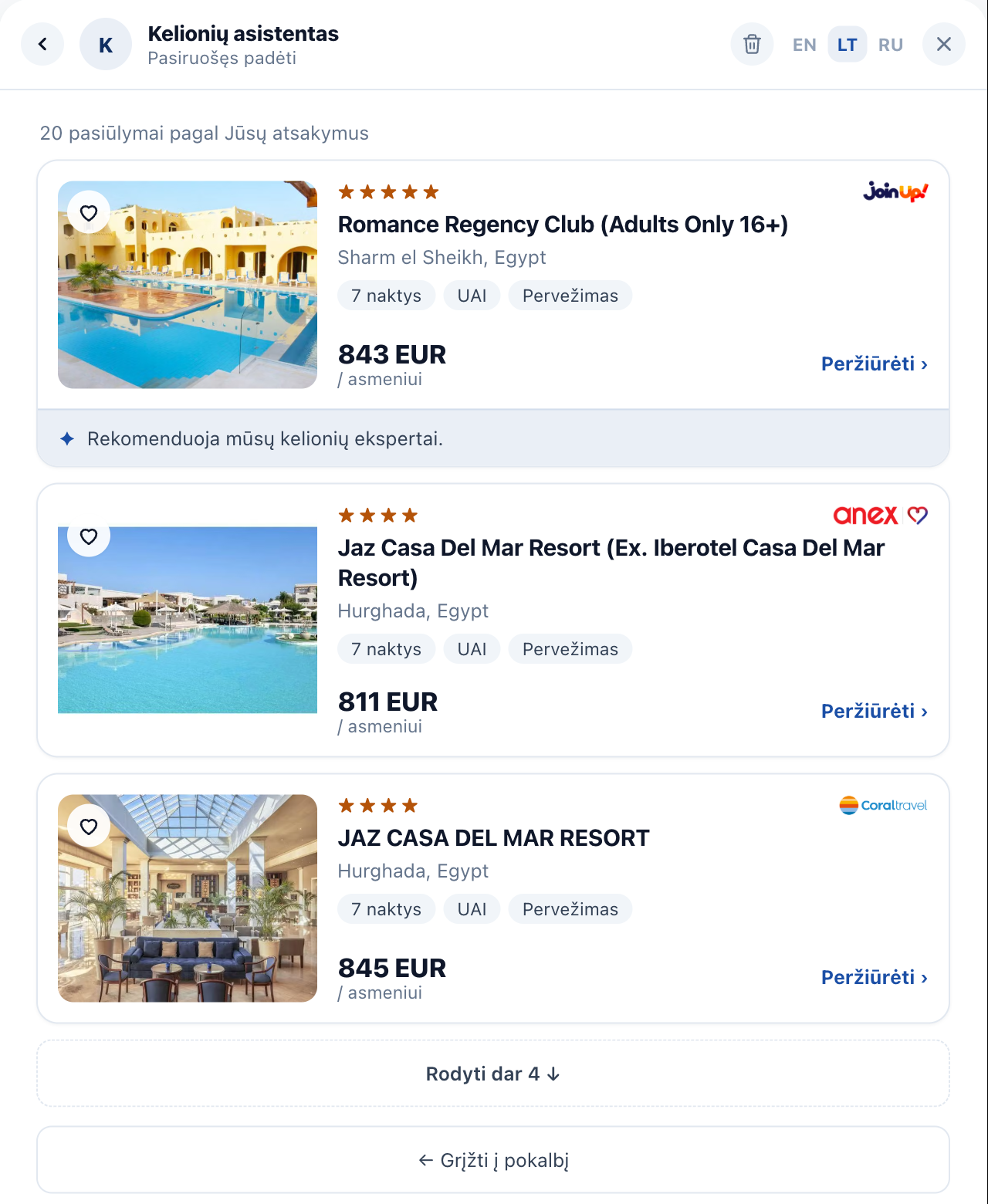
- Užklausa atkeliauja į jūsų sistemą, klientas iš karto mato pasiūlymus
-
AI asistentas Veikia
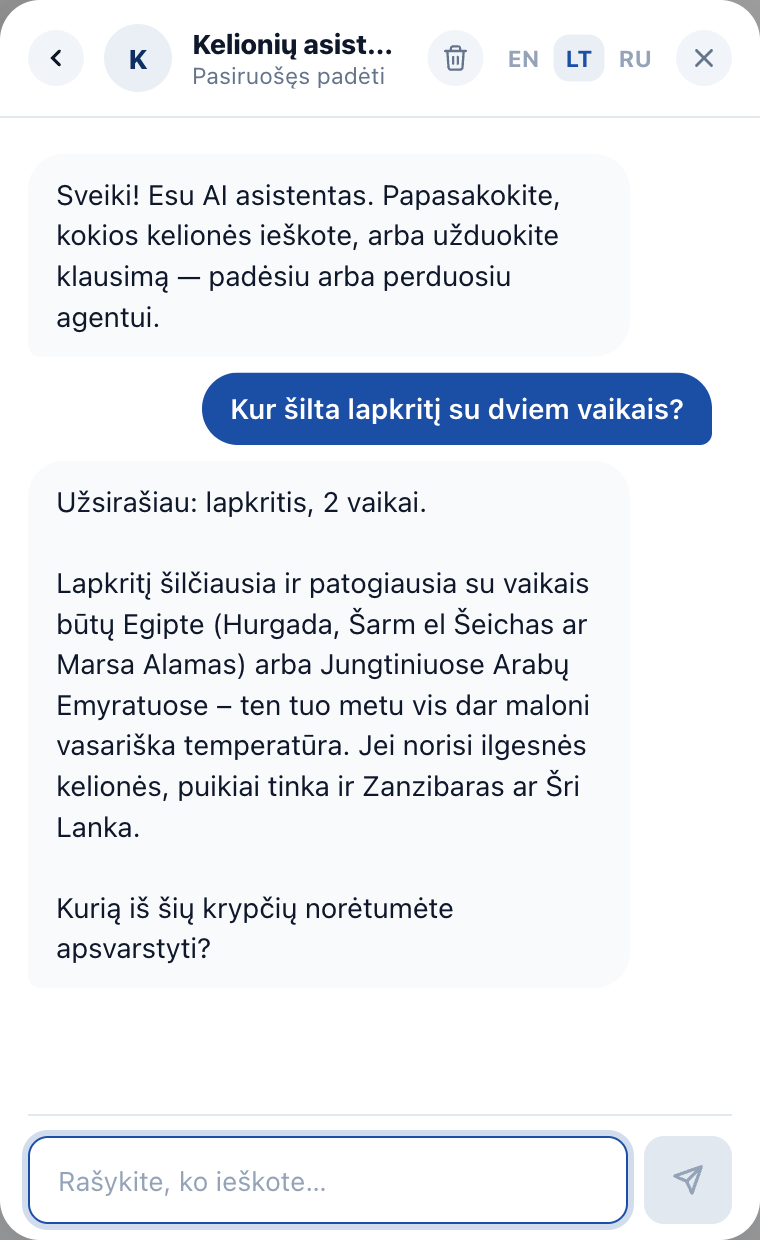
Atsako iš jūsų pateiktos informacijos ir padeda neapsisprendusiam išsirinkti.
- Vizos, sezonai, kelionės su vaikais
- Įsidėmi, ką klientas pasakė, ir užpildo užklausą už jį
- Kainų neišgalvoja, ko nežino, perduoda vadybininkui
- Kalba jūsų pasirinktomis kalbomis
-
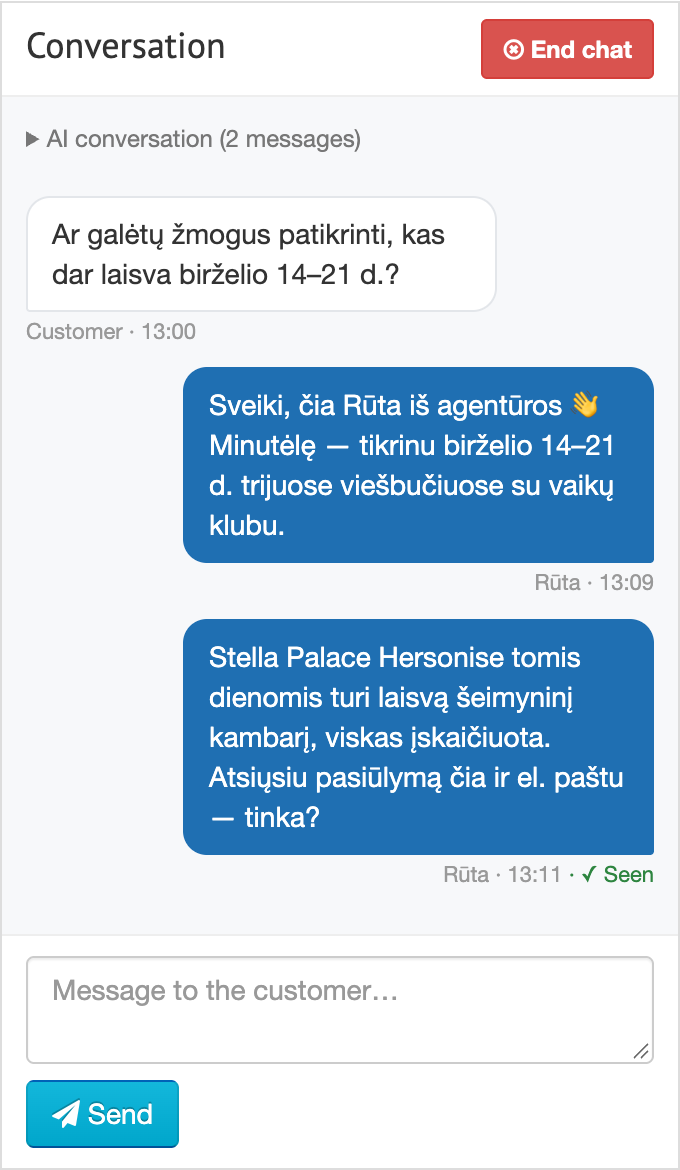
Gyvas pokalbis Veikia
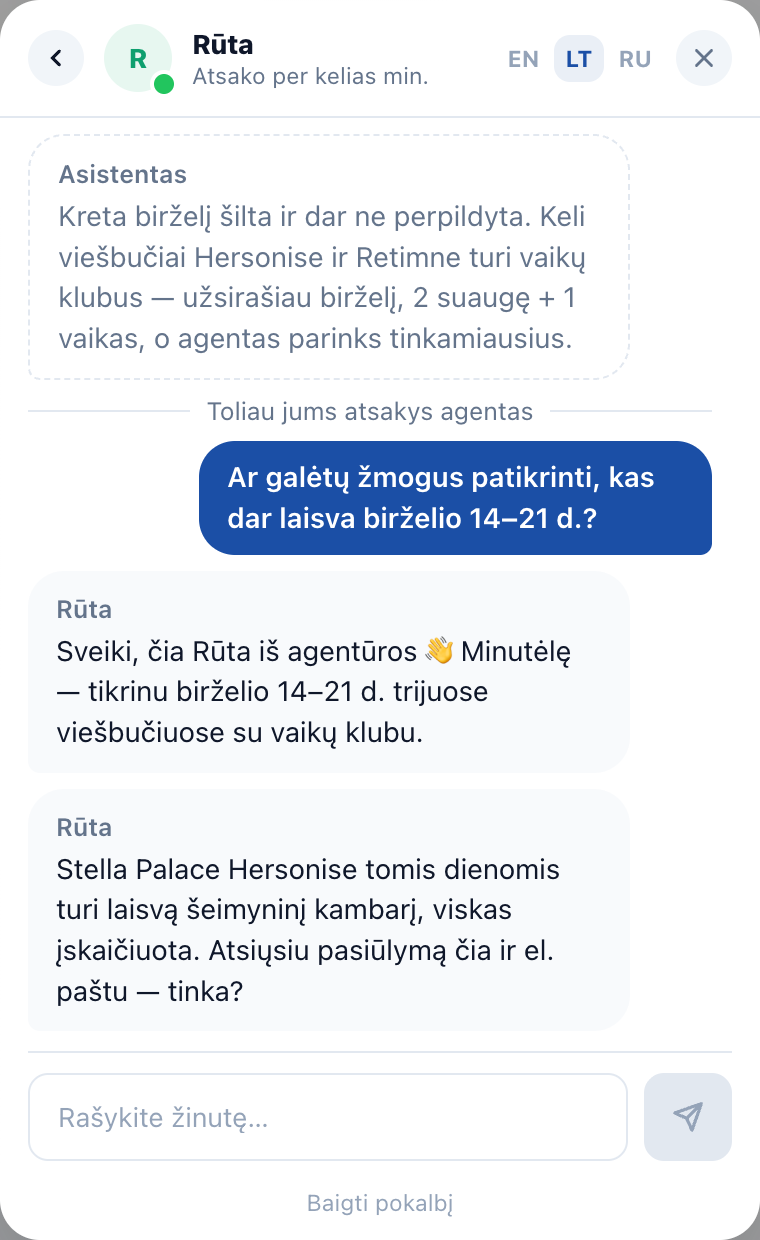
Kelionių agentas atsako tame pačiame lange — darbo valandomis per kelias minutes.
- Trys keliai: iš pasisveikinimo, po užklausos arba kai asistentas perduoda — DI istorija lieka viršuje
- Agentas sužino per minutę: skaitiklis administravimo antraštėje, naršyklės pranešimas, el. laiškas
- Atsako iš pačios užklausos kelionių sistemoje — atsakymas valdiklyje per kelias sekundes
- Uždarius langą atsakymas ateina el. paštu su nuoroda atgal į pokalbį